
This week we continue our series on Thankfulness.
In week 1 we discussed making gratitude a habit. In week 2, we discussed how to give thanks. Today we discuss 3 ways you can implement thankfulness.
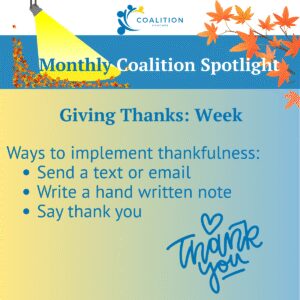
Send a text or email
If you think of something that you are thankful for about another colleague or partner, take just a few moments to send a quick text or email. This gesture may take less than a minute and yet can be really powerful in providing encouragement and gratitude. Although we cannot pay money to most of our coalition leaders or members, when we take the time to say thank you for specific things, we are giving them something that is often more important than money. We are demonstrating appreciation, value and enhancing the relationship. When we practice being thankful, we are building and sustaining relationships. Christi uses the app Punchbowl to send custom thank you notes via text or email.
Write a hand-written note
Many people have given a “gift” of their time, talents and energy and you want to thank them as well. We don’t know about you, but we remember the hand-written thank you notes we receive and find that it makes us even more grateful and continues building the relationship with that person. Christi recommends Postagram. You can digitally write a postcard and have it mailed to the recipient. You can even add photos if you have photos from an event.
Elizabeth hosts craft parties and participants use stamps, construction paper and markers like we did in elementary school. This was done for Valentine’s day last year and Elizabeth just got a text message saying that the friendship note she sent was hanging on someone’s wall and her friend looks at it every morning. These little things have a big lasting impact. Make it fun AND meaningful!
Say “thank you”
When we practice reflecting on thankfulness, we are more likely to be able to recognize opportunities to say thank you. Depending upon the person, saying thank you may be best in a one-on-one or small group setting. For others, you can say “thank you” in a larger group setting. When we pay attention to the positive and say “thank you” it can go a long way to foster gratitude in us and strengthen the relationship with those we are thanking. When we say thank you, it’s important to be sincere and specific. For instance, if someone says, “Thank you for being so great!” it doesn’t have nearly as much impact as “Thank you for giving your time and insight to develop this community resource on helping people become nonsmokers.” In a recent virtual meeting, I asked the group what they were thankful for and many of them responded with specific examples of working together as a team and supporting each other to make a difference in the lives of the people we are serving. Hearing a specific “thank you” from those working together created an environment that supports continuing to work together.
As you think about these three ways to say thank you, which one will you try in the next couple of weeks?